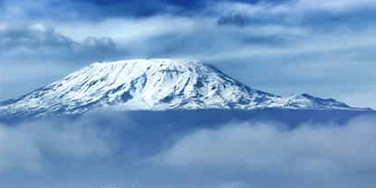
Als je je aan het oriënteren bent op een reis naar de Kilimanjaro, is het je waarschijnlijk opgevallen dat mensen de termen "trekking", "hiking" en "climbing" gebruiken om de ervaring te beschrijven.
Is het beklimmen van de Kilimanjaro dus daadwerkelijk klimmen?
Het antwoord hangt af van wat je onder klimmen verstaat.
Voor de standaardtrektochten op de Kilimanjaro zijn geen technische bergbeklimmersvaardigheden vereist. Over het algemeen zijn er geen touwen, technische rotsklimuitrusting of geavanceerde bergbeklimmerservaring nodig.
In plaats daarvan is de Kilimanjaro vooral een trektocht op grote hoogte, met lange wandeldagen, steil terrein, wisselend weer en een laatste beklimming naar 5.895 meter.
Deze gids legt het verschil uit tussen een trekking en een klim naar de top van de Kilimanjaro, beschrijft hoe de tocht er werkelijk uitziet en vertelt wat beginners moeten weten voordat ze hun trekking boeken.
Is het beklimmen van de Kilimanjaro een trekking of een echte klim?
De Kilimanjaro is technisch gezien een bergklim, maar de standaardroutes worden geclassificeerd als niet-technische trekkingroutes.
Dat betekent dat u normaal gesproken niet nodig heeft:
- Ervaring met rotsklimmen
- Vaardigheden in touwklimmen
- Ervaring met ijsklimmen
- Ervaring met gletsjertochten
- Technische bergsportuitrusting
In plaats daarvan volg je bestaande bergpaden, ondersteund door professionele gidsen.
Het zou echter ook misleidend zijn om de Kilimanjaro een eenvoudige wandeling te noemen.
De ervaring kan daarom het beste worden omschreven als een trektocht op grote hoogte met een beklimming van de top.
De ervaring kan daarom het beste worden omschreven als een trektocht op grote hoogte met een beklimming van de top.
Wat houdt een tocht naar de top van de Kilimanjaro eigenlijk in?
Een tocht naar de top van de Kilimanjaro is een meerdaagse reis door verschillende ecologische zones.
Afhankelijk van de route reis je mogelijk door:
- Landbouw- en bosgebieden
- Regenwoud
- Heide
- Alpenwoestijn
- Milieu van de Arctische top
Het landschap verandert drastisch naarmate je hoger komt.
Je kunt je tocht beginnen omringd door dichte begroeiing en uiteindelijk een koude, rotsachtige omgeving nabij de top bereiken.
Deze afwisseling is een van de kenmerkende aspecten van een tocht naar de Kilimanjaro.
Hoe zwaar is een tocht naar de top van de Kilimanjaro?
De beklimming van de Kilimanjaro is fysiek zwaar, maar de moeilijkheidsgraad ervan hangt niet in de eerste plaats samen met technisch klimwerk.
The biggest challenges include:
- Grote hoogte
- Lange wandeldagen
- Steile stukken
- Cold temperatures
- Reduced oxygen
- Limited sleep
- Fysieke vermoeidheid
- Topavond
Your fitness level can help you handle the physical demands, but fitness does not prevent altitude-related problems.
This is why pacing, acclimatization, and choosing an appropriate itinerary are important.
Heb je eerdere wandelervaring nodig?
Nee.
Veel mensen beklimmen de Kilimanjaro zonder eerdere ervaring met trektochten op grote hoogte.
Beginners moeten echter geen eerdere ervaring niet verwarren met geen voorbereiding vereist.
Je dient je voor te bereiden op:
- Lange wandeldagen
- Oneffen terrein
- Hoogtewinst
- Koud weer
- Carrying a daypack
- Several consecutive days of physical activity
Regular walking, hiking, stair training, and cardiovascular exercise can help prepare your body for the trek.

What Is the Difference Between Hiking and Kilimanjaro Trekking?
A normal day hike may last a few hours and allow you to return home the same day.
Kilimanjaro is completely different.
A typical Kilimanjaro itinerary lasts several days.
During this period, you will:
- Walk for multiple hours each day
- Sleep at different elevations
- Carry essential personal equipment
- Adapt to changing weather
- Eat and sleep at mountain camps
- Gradually gain altitude
The summit attempt adds another level of difficulty.
So while the walking itself is non-technical, the overall expedition requires endurance and preparation.
What Makes Kilimanjaro Different From Technical Mountain Climbing?
Technical mountain climbing can involve specialized skills and equipment.
For example:
- Rope systems
- Harnesses
- Ice axes
- Crampons
- Glacier travel
- Rock climbing
- Technical route protection
Standard Kilimanjaro trekking routes generally do not require these techniques.
Instead, the challenge comes from altitude and endurance.
This makes Kilimanjaro accessible to a much wider range of travelers than many technical mountain expeditions.
How Long Does a Kilimanjaro Trek Take?
The duration depends on the route and itinerary.
Common itineraries range from approximately 5 to 9 days, although longer itineraries can also be arranged.
The number of days matters because it affects:
- Daily walking distance
- Hoogtewinst
- Acclimatization opportunities
- Recovery time
- Overall trekking experience
A very short itinerary may require faster elevation gain, while longer itineraries provide more time to adapt.
When choosing a route, don’t look only at the number of days or the price.
Consider the entire elevation profile.
What Are the Main Kilimanjaro Trekking Routes?
Kilimanjaro has several established routes.
Machame-route
Machame is one of the most popular routes and is known for its scenic landscapes and varied terrain.
It is commonly completed in 6 or 7 days.
Lemosho-route
Lemosho approaches the mountain from the west and offers longer itinerary options.
It is known for scenic surroundings and gradual progression toward the upper mountain.
Marangu-route
Marangu is sometimes called the “Coca-Cola Route.”
Unlike most other routes, it uses mountain huts rather than tent camping.
Rongai-route
Rongai approaches Kilimanjaro from the northern side.
It provides a different perspective of the mountain and is often selected by trekkers looking for a less traditional approach.
Northern Circuit
The Northern Circuit follows a longer route around the mountain.
Its longer itinerary can provide additional time for acclimatization before the summit attempt.
Umbwe-route
Umbwe staat bekend om zijn steile en directe beklimming.
Because of its rapid elevation gain, it requires careful consideration when selecting an itinerary.
What Is Summit Night Like?
Summit night is the most demanding part of most Kilimanjaro itineraries.
Instead of starting the summit climb in the morning, trekkers usually begin during the night.
The exact start time depends on the route and itinerary.
You may walk through the darkness using a headlamp while temperatures remain extremely cold.
The objective is generally to reach the summit around sunrise.
This means your final ascent can involve several hours of continuous trekking.
What Should Beginners Bring for a Kilimanjaro Trek?
Your exact equipment requirements depend on the route and season, but essential items commonly include:
Clothing
- Moisture-wicking base layers
- Fleece or insulating layer
- Warme jas
- Waterproof jacket
- Trekking trousers
- Warme handschoenen
- Hoed
- Hiking socks
Trekking Equipment
- Hiking boots
- Wandelstokken
- Koplamp
- Backpack
- Waterflessen of hydratatiesysteem
- Zonnebril
- Sun protection
Personal Items
- Personal medication
- Toiletries
- Identification documents
- Camera or phone
- Small personal first-aid supplies
Your trekking operator should provide a detailed packing list before departure.
You don’t need to become a professional athlete.
The goal is to build walking endurance and consistency.
A useful training program can include:
Walking
Regular long walks help your body become accustomed to spending several hours on your feet.
Hills and Stairs
Uphill training can help prepare your legs for elevation gain.
Cardiovascular Exercise
Activities such as cycling, swimming, or running can help improve general endurance.
Strength Training
Focus on your:
- Legs
- Glutes
- Core
- Lower back
Most importantly, increase your training gradually rather than trying to complete very difficult workouts immediately before your trip.
Does Physical Fitness Guarantee a Successful Kilimanjaro Climb?
Nee.
Fitness can help with the physical demands of trekking, but altitude affects people differently.
Someone who is extremely fit can still experience altitude-related symptoms.
Similarly, someone who is not an elite athlete may successfully reach the summit with proper preparation and an appropriate itinerary.
This is why fitness and acclimatization should be treated as separate considerations.
How Important Is the Guide on a Kilimanjaro Trek?
Your guide plays an important role throughout the journey.
A professional guide can help with:
- Route navigation
- Trekkingstempo
- Camp routines
- Altitude monitoring
- Safety decisions
- Weather considerations
- Summit preparation
One of the most important things a climber can do is communicate honestly with the guide.
If you’re experiencing symptoms such as headache, nausea, dizziness, unusual fatigue, or difficulty breathing, tell your guide immediately.
What Is the Best Pace for Kilimanjaro?
One of the most common phrases you’ll hear on Kilimanjaro is:
“Pole pole.”
It means “slowly, slowly” in Swahili.
A controlled pace helps conserve energy and allows your body more time to adjust as you climb.
Trying to walk quickly because you’re physically fit can be counterproductive.
The objective is not to finish each day’s trek as quickly as possible.
The objective is to arrive at camp with enough energy for the next day.
Veelgestelde vragen
Is Kilimanjaro a hike or a climb?
Can a beginner trek Kilimanjaro?
Do you need climbing experience for Kilimanjaro?
How many days does a Kilimanjaro trek take?
Is Kilimanjaro harder than normal hiking?
Tot slot
Kilimanjaro is called a “climb,” but the standard routes are fundamentally different from technical mountaineering expeditions.
You don’t normally need ropes, rock-climbing skills, or previous mountaineering experience.
What you do need is preparation, patience, endurance, appropriate acclimatization, and respect for altitude.
For beginners, the most important decision is not simply whether you are experienced enough to climb Kilimanjaro.
It’s whether you choose the right itinerary and prepare properly for the demands of a high-altitude trek.
With professional guide support and a well-planned route, Kilimanjaro can provide an extraordinary trekking experience from the rainforest all the way to Uhuru Peak, the highest point in Africa.

 English
  Dutch
Dutch  French
  Czech
Czech  Spanish
  German
  Polish
  Italian
  Chinese
  Russian