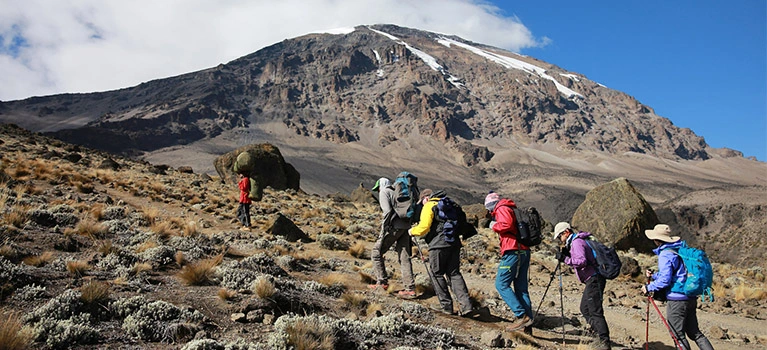
Climbing Mount Kilimanjaro is not just about fitness. It’s about how well your body adapts to altitude. The single biggest factor that determines whether you reach the summit or turn back early is acclimatization.
Many climbers underestimate this. But altitude—not exhaustion—is the primary reason people fail to summit.
If you understand how acclimatization works, you dramatically increase your chances of standing at Uhuru Peak.
What Is Acclimatization?
Acclimatization is the process by which your body adjusts to lower oxygen levels at high altitude.
As you climb higher on Kilimanjaro:
Air pressure decreases
Oxygen availability drops
Your body must adapt
Without proper adaptation, you may experience altitude sickness.
Your body responds by:
Increasing breathing rate
Producing more red blood cells
Improving oxygen efficiency
This process takes time. And time is exactly what rushed itineraries don’t allow.
Why Altitude Is the Real Challenge on Kilimanjaro
Mount Kilimanjaro rises to 5,895 meters (19,341 ft). At this altitude:
Oxygen levels are nearly 50% lower than sea level
Even fit climbers can struggle
Altitude sickness can affect anyone
It does not matter if you run marathons.
It does not matter if you lift weights.
Altitude affects everyone differently.
That’s why acclimatization strategy matters more than physical strength.
A well-designed itinerary includes:
1. Gradual Ascent
Climbing slowly gives your body time to adjust.
2. “Climb High, Sleep Low” Strategy
You ascend to a higher elevation during the day, then descend slightly to sleep.
This stimulates adaptation while reducing stress.
3. Extra Acclimatization Days
Longer routes (7–9 days) have significantly higher summit success rates than shorter 5–6 day routes.
More days = More oxygen adaptation = Higher success.
Routes with Better Acclimatization Profiles
Some routes naturally provide better altitude adaptation because of their structure:
Shorter routes may save money, but they reduce your body’s adjustment window.
Choosing the right route is part of your acclimatization strategy.

Signs Your Body Is Not Acclimatizing Well
Common symptoms of altitude sickness include:
Headache
Nausea
Dizziness
Fatigue
Loss of appetite
Shortness of breath
Severe symptoms (rare but serious):
Confusion
Difficulty walking
Persistent vomiting
Severe breathlessness
Professional guides monitor oxygen levels daily to ensure climber safety.
Does Diamox Help with Acclimatization?
Diamox (Acetazolamide) can help speed up acclimatization by improving breathing efficiency.
However:
It is not a replacement for proper itinerary design
It works best when combined with gradual ascent
Always consult your doctor before use
The best solution is still a longer route with built-in acclimatization days.
Why Rushing Kilimanjaro Reduces Success
Budget itineraries often offer 5–6 day climbs.
The problem?
Rapid elevation gain
Less recovery time
Higher risk of altitude sickness
Lower summit success rates
A slower climb increases:
Comfort
Safety
Confidence
Summit probability
How Guides Support Acclimatization
Professional Kilimanjaro operators support acclimatization through:
Daily health checks
Oxygen saturation monitoring
Controlled hiking pace (“pole pole” – slowly slowly)
Structured acclimatization hikes
This systematic approach dramatically improves outcomes.
How to Maximize Your Acclimatization Before Climb
You cannot fully pre-acclimatize at sea level, but you can:
Choose a 7–9 day route
Stay hydrated
Eat consistently
Avoid alcohol before climb
Train for endurance
Arrive well-rested
Mental preparation also plays a role. Calm climbers breathe better and manage altitude stress more effectively.
FAQ's
Q1: Is acclimatization more important than fitness?
Q2: What is the best number of days for Kilimanjaro?
Q3:Can I summit Kilimanjaro in 5 days?
Q4: Does everyone get altitude sickness?
Final Thoughts: Acclimatization Is the Real Summit Strategy
Kilimanjaro is not a technical mountain.
It is an altitude mountain.
Your success depends on patience, route selection, and gradual ascent—not speed.
If you choose a longer route, climb slowly, and allow your body to adapt, your chances of reaching Uhuru Peak increase dramatically.
Summiting Kilimanjaro is less about pushing harder—and more about climbing smarter.
 English
  Dutch
Dutch  French
  Czech
Czech  Spanish
  German
  Polish
  Italian
  Chinese
  Russian