
Het bereiken van Uhuru Peak (5.895 m / 19.341 ft) is een onvergetelijke prestatie. Na dagenlang trekken en een zware nachtelijke klim naar de top, is het moment waarop je op het hoogste punt van Afrika staat er een dat je je altijd zult herinneren.
Maar veel klimmers beseffen niet dat de klim niet voorbij is zodra je de top bereikt.
De afdaling is eigenlijk net zo belangrijk als de beklimming. Wat er gebeurt na het bereiken van Uhuru Peak helpt je om je fysiek en mentaal voor te bereiden op de laatste fase van je Kilimanjaro-avontuur.
Snel antwoord
Na het bereiken van Uhuru Peak blijven klimmers ongeveer 10 tot 20 minuten op de top, voordat ze voorzichtig afdalen naar een lager gelegen kamp. De meeste trekkers dalen op de topdag 2.000 tot 3.000 meter af om de effecten van de hoogte te beperken en veilig te kunnen herstellen.
Waarom je niet lang op Uhuru Peak blijft
Hoewel het bereiken van de top spannend is, moedigen gidsen klimmers aan om kort na aankomst aan de afdaling te beginnen.
Er zijn hiervoor verschillende redenen:
- Het zuurstofgehalte is extreem laag.
- De temperaturen liggen vaak onder het vriespunt.
- Sterke wind kan de omstandigheden onaangenaam maken.
- Langdurige blootstelling verhoogt het risico op hoogteziekte.
De meeste klimmers besteden net genoeg tijd om:
- Vier hun prestatie
- Maak foto's
- Geniet van de zonsopgang
- Ontvang de foto's van hun certificaatuitreiking
Je gids houdt de groep nauwlettend in de gaten en bepaalt wanneer het tijd is om af te dalen.
De afdaling begint onmiddellijk.
Na het verlaten van Uhuru Peak daal je af richting Stella Point, voordat je verder afdaalt naar het kamp waar je de nacht doorbrengt.
Afhankelijk van je route kan dit kampen omvatten zoals:
- Barafu-kamp
- Kamp Kosovo
- Kibo-hut
Het eerste deel van de afdaling is vaak steil en bedekt met los vulkanisch gruis.
Wandelstokken zijn uiterst nuttig om je evenwicht te bewaren en de druk op je knieën te verminderen.
Waarom afdalen makkelijker aanvoelt
Veel klimmers merken dat ze zich aanzienlijk beter voelen nadat ze hoogte hebben verloren.
Naarmate het zuurstofgehalte stijgt, kunt u het volgende ervaren:
- Meer energie
- Verbeterde ademhaling
- Reduced headaches
- Better appetite
- Improved mental clarity
This is one reason guides encourage a rapid but controlled descent after summiting.
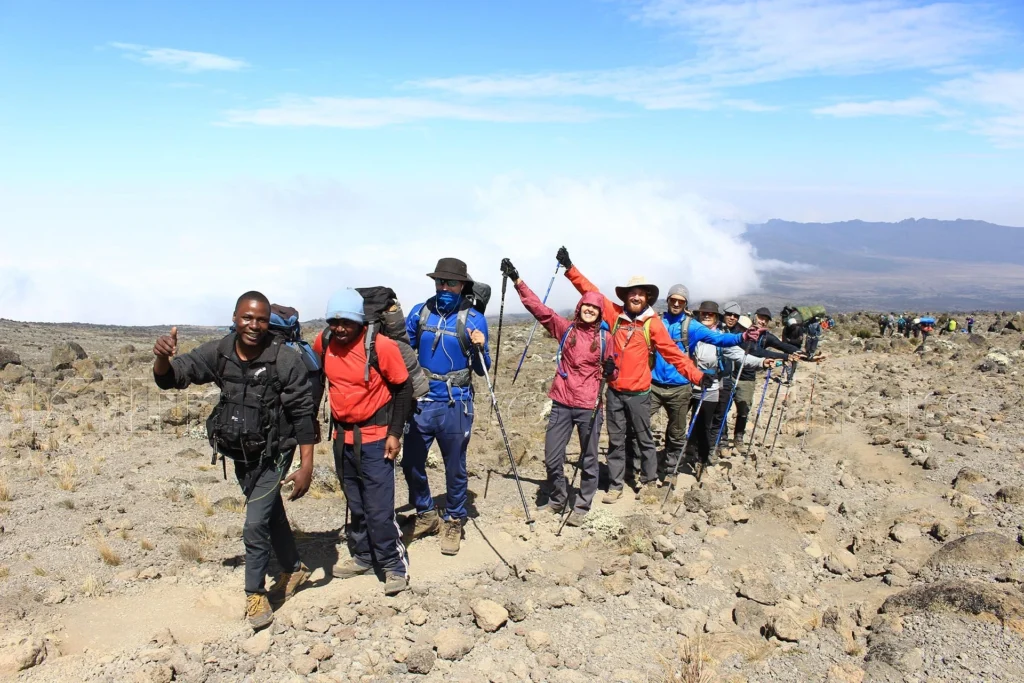
Returning to Camp
Once you reach your summit camp, you’ll have time to:
- Rest
- Eat a hot meal
- Drink plenty of water
- Change clothes
- Recover before continuing downward
Most climbers stay for one or two hours before descending further to a lower camp for the night.
Although you’re tired, continuing downward greatly improves recovery.
How Long Is the Descent?
The descent is usually completed over one or two days, depending on your chosen route.
Typical descent times include:
- Summit to first camp: 3–5 hours
- First camp to final exit gate: 4–7 hours the following day
Overall, summit day can last 10–15 hours, making it the longest day of the expedition.
What Happens at the Exit Gate?
After leaving the mountain, you’ll arrive at your route’s exit gate.
Here you’ll:
- Sign out of the national park
- Receive your official summit certificate
- Meet your transfer vehicle
- Return to your hotel
Summit certificates are awarded based on the highest point reached.
Celebrating Your Achievement
Back at the hotel, climbers often enjoy:
- A hot shower
- A comfortable bed
- A celebratory dinner
- Sharing photos with fellow trekkers
- Receiving congratulations from the climbing team
Many climbers describe this as one of the most rewarding moments of the entire journey.
How Your Body Feels After the Summit
It’s normal to experience:
- Muscle soreness
- Vermoeidheid
- Stiff legs
- Mild dehydration
These symptoms usually improve within a few days.
Staying hydrated, eating nutritious meals, and getting plenty of rest will speed up recovery.
Recovery Tips After Climbing Kilimanjaro
To recover well after your climb:
✔ Drink plenty of water.
✔ Eat balanced meals rich in carbohydrates and protein.
✔ Stretch your muscles gently.
✔ Get sufficient sleep.
✔ Avoid intense physical activity for several days.
✔ Continue hydrating during your travels.
Most climbers return to normal activities within a week.
Emotional Impact of Reaching Uhuru Peak
For many people, reaching the Roof of Africa is more than a physical accomplishment.
It represents:
- Personal determination
- Mental resilience
- Teamwork
- Vertrouwen
- Lifelong memories
Many climbers say the experience changes how they approach future challenges in life.
Why Your Guides Continue Monitoring You
Although you’ve reached the summit, your guides continue monitoring your health during the descent.
They regularly check:
- Oxygen saturation
- Walking stability
- Hydration levels
- Signs of exhaustion
- Symptomen van hoogteziekte
Descending safely remains the highest priority.
Why Choose Kilimanjaro Climbing Club?
At Kilimanjaro Climbing Club, our responsibility doesn’t end at Uhuru Peak.
Our experienced mountain team continues supporting you throughout the descent by providing:
- Professional medical monitoring
- Safe pacing
- Voedzame maaltijden
- Comfortable camps
- Encouragement until you safely return from the mountain
Our goal is not only to help you reach the summit—but to ensure you complete your adventure safely and confidently.
Tot slot
Standing on Uhuru Peak is the highlight of every Kilimanjaro expedition, but reaching the summit is only part of the journey. A safe and well-managed descent is essential for completing your adventure successfully.
By following your guides, staying hydrated, and descending carefully, you’ll finish your Kilimanjaro climb with unforgettable memories and a tremendous sense of achievement.
At Kilimanjaro Climbing Club, we’re with you every step of the way—from your first day on the trail to the moment you safely return from Africa’s highest mountain.
 English
  Dutch
Dutch  French
  Czech
Czech  Spanish
  German
  Polish
  Italian
  Chinese
  Russian