
People search for the easiest Kilimanjaro route assuming that difficulty is the primary factor they need to manage. In reality, the relationship between difficulty and success is more nuanced than it first appears. Some ‘easier’ routes have lower summit success rates. Some ‘harder’ routes produce far better outcomes.
This 2026 guide ranks every major Kilimanjaro route from easiest to hardest — and explains exactly what difficulty means on Africa’s highest peak.
What Makes a Kilimanjaro Route 'Difficult'?
Route difficulty on Kilimanjaro is determined by several factors:
Steepness of ascent and descent
Daily walking hours and distance
Altitude gain per day
Number of acclimatisation days
Terrain type (rainforest paths vs. rocky ridges vs. alpine desert)
Crucially, shorter routes are not easier — they are often harder on the body because they give you less time to adjust to altitude. This is one of the most common misconceptions about Kilimanjaro.
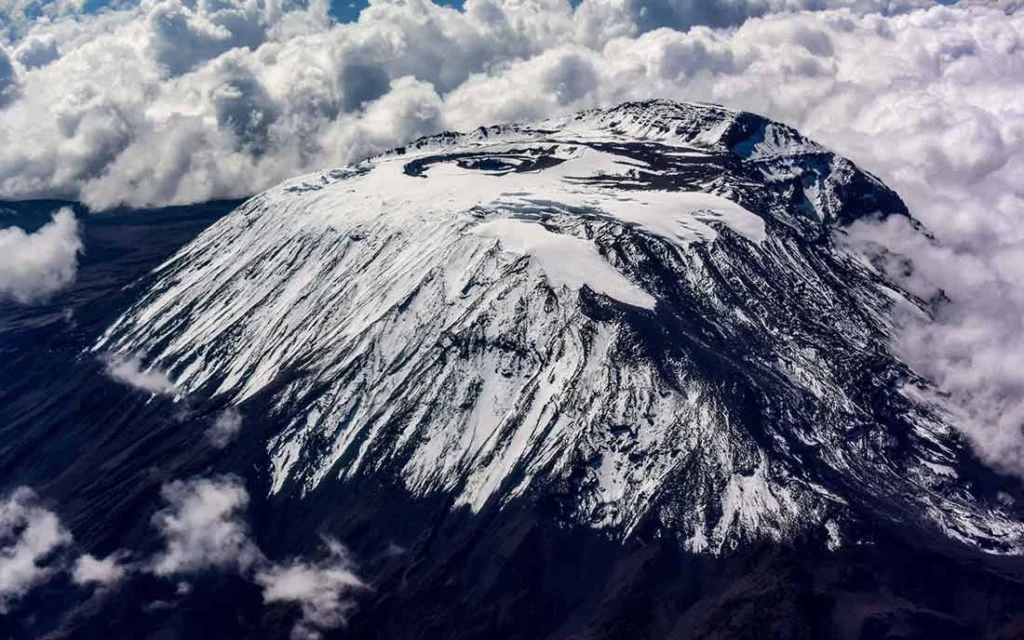
Kilimanjaro Routes Ranked: Easiest to Hardest
#1 Easiest: Marangu Route (6 Days) — The Misleading 'Easy' Route
Marangu is marketed as the ‘easiest’ or ‘beginner’ route because it uses hut accommodation and has relatively gentle gradients. However, its 6-day schedule means your body has very little time to acclimatise. This results in a low summit success rate of around 50–65%.
From a pure physical standpoint, Marangu’s terrain is relatively forgiving. From an altitude management standpoint, it is one of the harder routes to complete successfully. We rank it easiest in terms of terrain, but it is not easiest in terms of summit odds.
Terrain difficulty: ★★☆☆☆ (Easy)
Summit success difficulty: ★★★★☆ (Hard — short timeline)
#2 Rongai Route (7 Days) — Gentle Approach from the North
Rongai is the only route that ascends from the Kenyan border side and is known for its relatively consistent, non-technical gradient. It passes through drier terrain than the southern routes and offers a peaceful, uncrowded experience. The 7-day schedule gives reasonable — though not excellent — acclimatisation.
Terrain difficulty: ★★☆☆☆ (Easy-Moderate)
Best for: Trekkers wanting a gentler pace through less-visited terrain
#3 Lemosho Route (8 Days) — Ideal Balance
Lemosho is considered moderately challenging in terms of terrain — it crosses the dramatic Shira Plateau and includes some steep sections — but its 8-day schedule makes acclimatisation manageable. The route’s profile includes deliberate ‘climb high, sleep low’ elements that improve your altitude adaptation.
Despite being more demanding than Rongai, Lemosho has a higher success rate because it’s longer and better designed for acclimatisation.
Terrain difficulty: ★★★☆☆ (Moderate)
Best for: Most trekkers, including beginners with good fitness
#4 Northern Circuit (9–10 Days) — Long but Manageable
The Northern Circuit is the longest route on Kilimanjaro and covers terrain on all sides of the mountain. Daily walking hours are significant (6–8+ hours some days), but the pace is gradual and the extended timeline means altitude stress is spread over many days. This is the easiest route in terms of summit probability, despite being long.
Terrain difficulty: ★★★☆☆ (Moderate — but long days)
Best for: Anyone prioritising summit success over speed
#5 Machame Route (7 Days) — Popular but Demanding
The Machame Route is steep, particularly on day 2 (the ascent to Shira Camp) and the summit night push. It moves fast and requires sustained effort over 7 days. Its popularity doesn’t make it easy — it is one of the more physically demanding routes on the mountain. Extending to 8 days reduces difficulty considerably.
Terrain difficulty: ★★★★☆ (Moderate-Hard)
Best for: Fit, experienced trekkers; not recommended for beginners
#6 Hardest: Umbwe Route (6 Days) — For Experienced Climbers Only
Umbwe is Kilimanjaro’s steepest, most direct, and most challenging route. It ascends rapidly through dense forest and exposed ridgelines before joining the Southern Circuit. The 6-day schedule offers minimal acclimatisation. Umbwe is genuinely hard — both physically and in terms of altitude management — and carries one of the lower success rates despite requiring the most fitness.
Terrain difficulty: ★★★★★ (Very Hard)
Best for: Experienced high-altitude trekkers only
Full Comparison: All Routes Ranked
Rank (Easiest→Hardest) Route Days Terrain AMS Risk Success Rate
1 — Easiest terrain Marangu 6 Easy Very High ~55–65%
2 Rongai 7 Easy-Moderate Moderate ~70–80%
3 Lemosho 8 Moderate Low-Moderate ~85–90%
4 Northern Circuit 9–10 Moderate Lowest ~90–95%
5 Machame 7 Moderate-Hard Moderate ~75–85%
6 — Hardest Umbwe 6 Very Hard Very High ~60–70%
The Counter-Intuitive Truth About Kilimanjaro Difficulty
If you’ve read this far, you’ll have noticed something: the easiest route (Marangu) has one of the lowest success rates, while the ‘hardest’ routes in terms of length (Lemosho, Northern Circuit) have the highest success rates.
This is because altitude sickness is the real enemy on Kilimanjaro — not technical terrain. Routes that give you more time to acclimatise are fundamentally more achievable, regardless of how physically demanding their terrain is day to day.
Our recommendation at Kilimanjaro Climbing Club: choose a route based on success potential, not just terrain difficulty. A slightly harder daily walk is far easier to push through than altitude sickness at 5,000m.
Which Route Should You Book?
First-timer, moderate fitness: Lemosho 8-day
Maximum success odds: Northern Circuit 9–10 day
Fit and experienced: Machame 7–8 day
Avoid (for most people): Marangu 6-day, Umbwe
Ready to book? Visit kilimanjaroclimbingclub.com or contact us directly to discuss the right route for your 2026 Kilimanjaro climb.
 English
  Dutch
Dutch  French
  Czech
Czech  Spanish
  German
  Polish
  Italian
  Chinese
  Russian