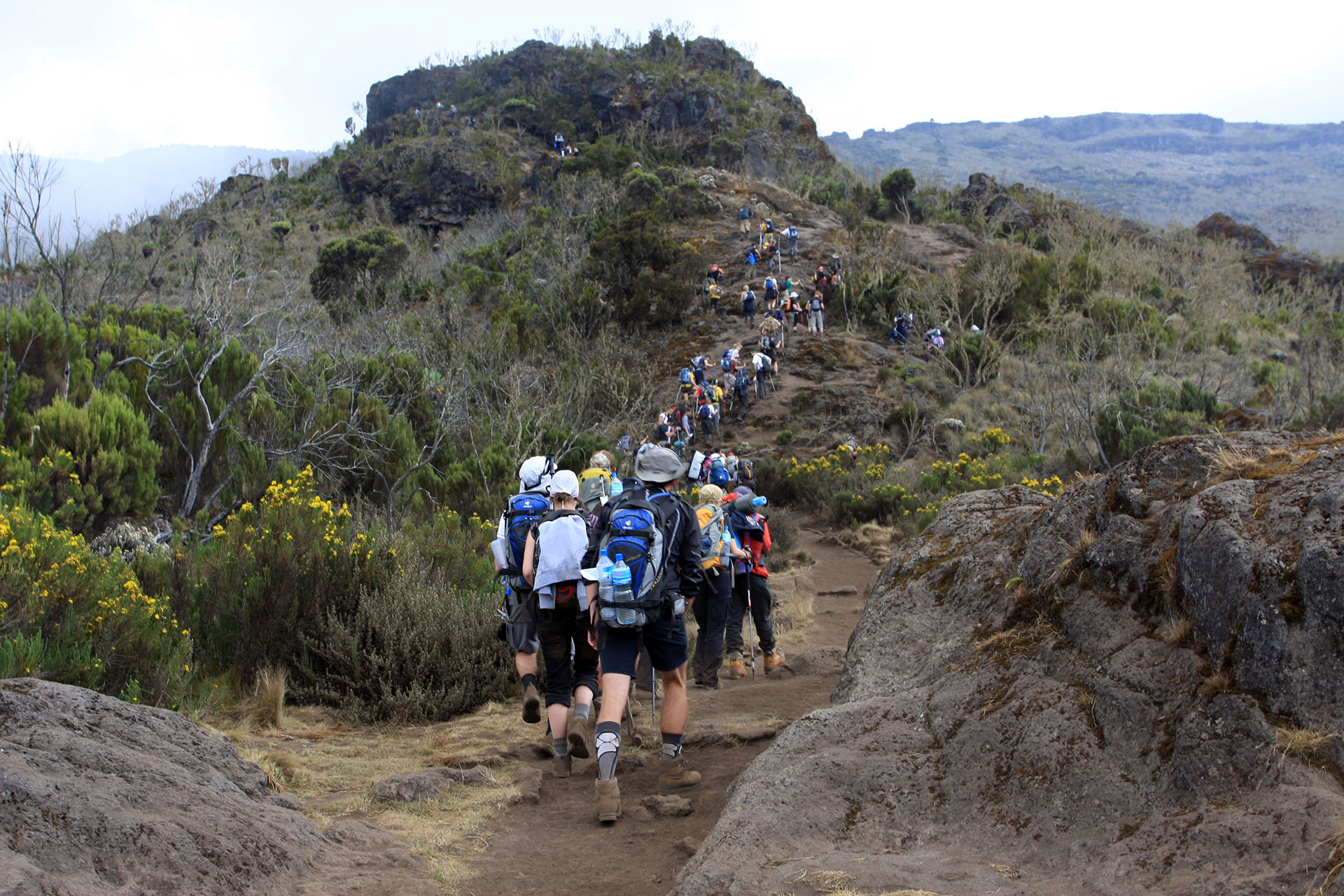
The Rongai Route is one of Kilimanjaro’s most unique and underrated routes. Approaching the mountain from the remote northern side, near the Kenyan border, it offers a quieter, drier, and more gradual ascent than most routes.
For trekkers seeking a less crowded, more peaceful Kilimanjaro experience, Rongai is often the perfect pick.
But is it the right route for you?
This guide breaks down the pros, cons, difficulty, scenery, and who should choose Rongai.
🌍 Overview of the Rongai Route
Duration: 6–7 days
Difficulty: Moderate
Scenery: Diverse but less dramatic
Traffic: Low (one of the quietest routes)
Approach: Northern side (Kenya side)
Accommodation: Camping only
Unlike routes such as Machame or Lemosho, Rongai offers a calm, wilderness feel with far fewer trekkers.
⭐ Pros of the Rongai Route
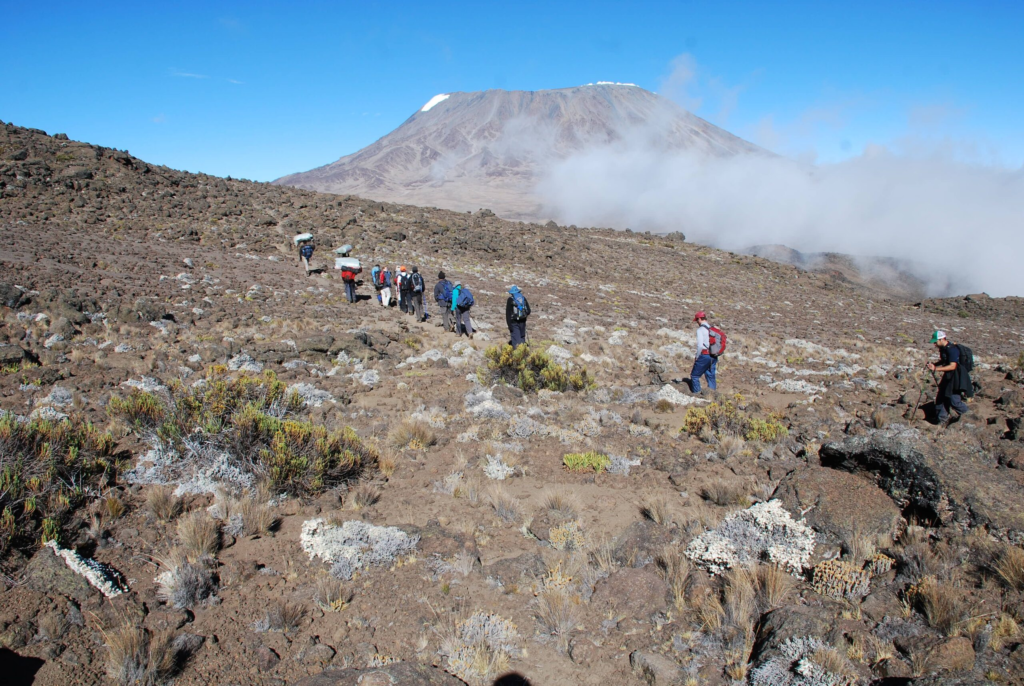
1. Quietest Route on Kilimanjaro
Rongai is ideal if you want:
No crowds
Remote wilderness
A peaceful ascent
Other routes often feel busy—Rongai does not.
2. Best for Wet Seasons
The northern side receives very little rainfall, making Rongai the best choice for:
March–May
November
Trekkers stay far drier than on southern routes.
3. Gradual Ascent (Great for Beginners)
Its gentle slope makes it perfect for:
New trekkers
Families
Those concerned about physical difficulty
This improves your chances of reaching the summit.
4. Amazing Wildlife
Highly possible to see:
Colobus monkeys
Blue monkeys
Rare antelope species
Forest birds
This route begins in remote forest, offering real wildlife encounters.
⭐ Cons of the Rongai Route
❌ 1. Less Dramatic Scenery
Compared to Machame or Lemosho, Rongai has:
Fewer dramatic landscapes
No Barranco Wall
Less variation in vistas
It’s scenic—but more subtle.
❌ 2. Fewer Acclimatization Features
Rongai doesn’t offer “climb high, sleep low” opportunities like other routes.
To compensate, the 7-day version is strongly recommended.
❌ 3. Longer Return Drive
Because the route descends via Marangu Gate, your final drive back is longer.
⭐ Rongai Route Difficulty
Difficulty level: Moderate
Most trekkers say:
The walking is manageable
The incline is gentle
Summit night is tough (like all routes)
For beginners, this is one of the easiest options physically.
See how to prepare:
👉 https://kilimanjaroclimbingclub.com/kilimanjaro-trek-preparation/
⭐ What to Expect Day by Day
Day 1 – Nalemoru Gate → Simba Camp
Gentle forest trail with wildlife sightings.
Day 2 – Simba Camp → Second Cave Camp
Open landscapes and gradual ascent.
Day 3 – Second Cave → Kikelelwa Camp
Beautiful views of Mawenzi Peak.
Day 4 – Acclimatization Day (Highly recommended)
Optional hike near Mawenzi Tarn.
Great for altitude adaptation.
Learn about altitude risks:
👉 https://kilimanjaroclimbingclub.com/altitude-sickness-on-kilimanjaro/
Day 5 – Kikelelwa → Mawenzi Tarn → Kibo Hut Camp Area
Stunning high-altitude desert zone.
Day 6 – SUMMIT Night → Horombo Hut
Long and challenging push to Uhuru Peak.
Descend to Horombo.
Day 7 – Horombo → Marangu Gate
Back through rainforest and exit.
⭐ Who Should Choose the Rongai Route?
👍 Ideal for:
Trekkers who want quiet trails
Climbers who want dry conditions
Beginners who prefer a gradual ascent
Trekkers during rainy months
Wildlife lovers
👎 Not ideal for:
Photographers seeking dramatic landscapes
Climbers who want the iconic Barranco Wall
Trekkers needing the best acclimatization profile
If scenery is your top priority, consider:
👉 Lemosho Route
https://kilimanjaroclimbingclub.com/lemosho-route/
⭐ Final Verdict — Is the Rongai Route Right for You?
The Rongai Route is an excellent choice for climbers who value quietness, dry conditions, and a steady ascent. It may not offer the dramatic scenery of other routes, but its peaceful environment and friendly gradient make it a top pick for beginners and off-season trekkers.
Explore the full route details:
👉 https://kilimanjaroclimbingclub.com/rongai-route/
Compare all routes here:
👉 https://kilimanjaroclimbingclub.com/kilimanjaro-routes-and-maps/
Book your trek with our experts:
👉 https://kilimanjaroclimbingclub.com/contact-kilimanjaro-trekking-experts/
 English
  Dutch
Dutch  French
  Czech
Czech  Spanish
  German
  Polish
  Italian
  Chinese
  Russian