Odżywianie odgrywa kluczową rolę w sukcesie w górach. Częstym pytaniem, jakie zadają sobie wspinacze, jest: Co jeść podczas wyprawy na Kilimandżaro?
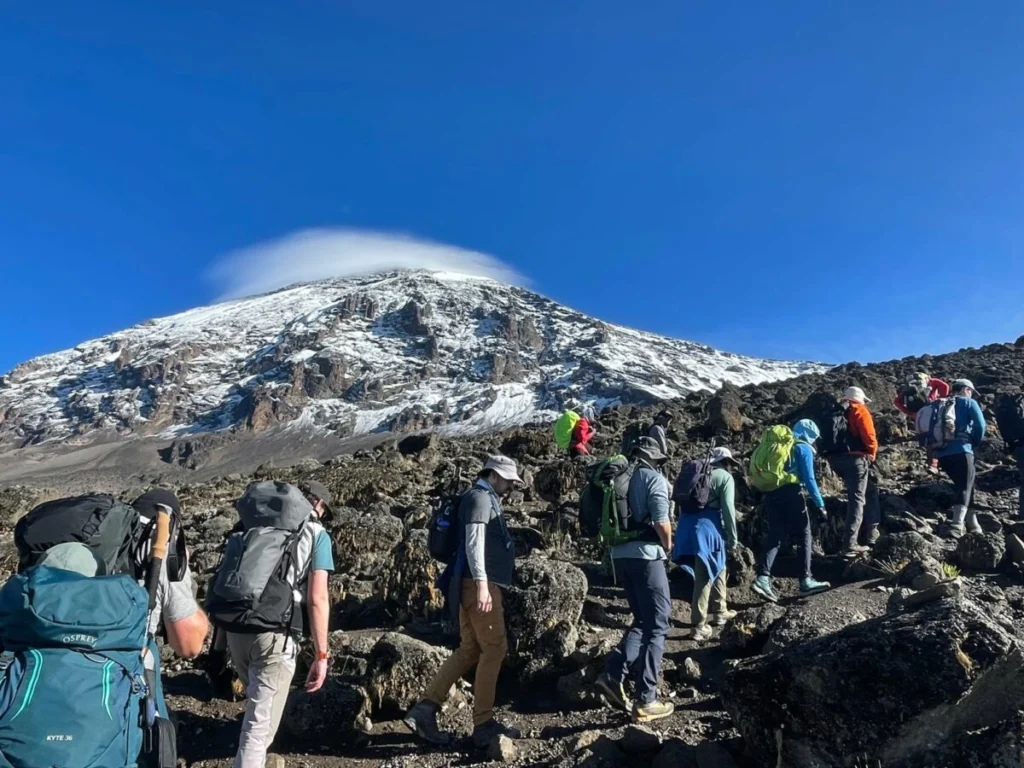
Krótka odpowiedź brzmi: powinieneś jeść wysokoenergetyczne, łatwostrawne produkty bogate w węglowodany, umiarkowaną ilość białka i zdrowe tłuszcze. Twój organizm potrzebuje stałego źródła paliwa, aby przetrwać długie wędrówki, niskie temperatury i przebywanie na dużych wysokościach.
Prawidłowe odżywianie pomaga utrzymać odpowiedni poziom energii, wspomaga aklimatyzację i zwiększa szanse na zdobycie szczytu.
Jakiego rodzaju jedzenie jest dostępne na Kilimandżaro?
Większość wypraw na Kilimandżaro odbywa się w towarzystwie kucharza, który przygotowuje świeże posiłki przez całą podróż.
Typical meals include:
- Hot breakfasts (porridge, eggs, toast)
- Packed or hot lunches (sandwiches, rice, pasta)
- Warm dinners (soup, vegetables, chicken, rice or potatoes)
- Snacks (fruit, biscuits, popcorn)
Meals are designed to be nutritious, energy-rich, and easy to digest at altitude.
What Nutrients Do You Need on Kilimanjaro?
1. Carbohydrates (Primary Energy Source)
Carbs are the most important nutrient during the trek.
They provide quick energy for long hiking days and help your body perform better at high altitude.
Examples:
- Rice
- Pasta
- Potatoes
- Bread
- Oats
Protein helps repair muscles after long days of trekking.
Examples:
- Chicken
- Jajka
- Beans
- Lentils
3. Healthy Fats (Sustained Energy)
Fats provide longer-lasting energy, especially in cold conditions.
Examples:
- Nuts
- Peanut butter
- Oils used in cooking
What Should You Eat Each Day?
Śniadanie
A good breakfast prepares your body for the day ahead.
Typical options:
- Porridge or oats
- Jajka
- Toast with jam or peanut butter
- Tea or coffee
Obiad
Lunch is usually lighter to keep you moving comfortably.
Options include:
- Sandwiches
- Boiled eggs
- Owoce
- Juice or tea
Kolacja
Dinner is the most important meal for recovery.
Typical meals:
- Soup (very important at altitude)
- Rice, pasta, or potatoes
- Warzywa
- Meat or vegetarian protein
Przekąski
Snacking is essential to maintain energy levels throughout the day.
Good snack options:
- Energy bars
- Chocolate
- Nuts
- Dried fruits
How Does Altitude Affect Appetite?
At high altitude, many climbers experience reduced appetite.
This is normal and happens because of:
- Lower oxygen levels
- Slower digestion
- Physical fatigue
Even if you don’t feel hungry, it’s important to eat regularly to maintain energy and prevent exhaustion.
What Foods Should You Bring Yourself?
Although meals are provided, bringing personal snacks is highly recommended.
Good options include:
- Energy bars
- Electrolyte drinks
- Chocolate or sweets
- Trail mix
- Protein bars
These are helpful during long trekking days and especially on summit night.
What Should You Drink on Kilimanjaro?
Hydration is just as important as food.
Climbers are advised to drink 3–4 liters of water per day.
Recommended drinks:
- Water
- Tea
- Soup
- Electrolyte drinks
Proper hydration helps reduce the risk of altitude sickness and keeps energy levels stable.
Foods to Avoid on Kilimanjaro
Certain foods may not be ideal during the trek.
Unikać:
- Heavy, greasy foods
- Alcohol
- Excess caffeine
- Foods that are difficult to digest
Simple, clean, and energy-rich meals are best at high altitude.
Tips for Eating Well on Kilimanjaro
Eat even if you’re not hungry
Your body still needs fuel.
Focus on carbohydrates
They provide quick and effective energy.
Snack frequently
Small snacks help maintain energy levels.
Utrzymuj nawodnienie
Drink water consistently throughout the day.
Trust your trekking team
Meals are planned to support your performance on the mountain.
Final Answer: What Should You Eat During a Kilimanjaro Trek?
During a Kilimanjaro trek, you should eat high-energy foods rich in carbohydrates, moderate protein, and healthy fats. Meals typically include rice, pasta, vegetables, and protein, along with snacks like nuts and energy bars. Eating regularly and staying hydrated are essential for maintaining energy, supporting acclimatization, and successfully reaching the summit.
 English
  Dutch
Dutch  French
  Czech
Czech  Spanish
  German
  Polish
  Italian
  Chinese
  Russian