Einer der wichtigsten Faktoren, der Ihr Kilimandscharo-Erlebnis beeinflusst, ist das Wetter. Die Wahl der richtigen Jahreszeit kann Ihren Gipfelerfolg, die Wegbeschaffenheit, die Landschaft und Ihren allgemeinen Komfort am Berg erheblich verbessern.
Da der Kilimandscharo fast 6.000 Meter über dem Meeresspiegel aufragt, erleben die Bergsteiger während der Tour verschiedene Klimazonen – von der feuchten Regenwaldluft bis hin zu den eisigen Temperaturen der Arktis in Gipfelnähe.
In diesem umfassenden Kilimandscharo-Wetterführer erfahren Sie, wann die besten Monate für die Besteigung sind, über die jahreszeitlichen Bedingungen, die Temperaturen und Niederschlagsmuster Bescheid wissen und wie sich das Wetter auf den Gipfelerfolg auswirkt.
Wann ist die beste Zeit für eine Kilimandscharo-Besteigung?
Die beste Zeit für eine Kilimandscharo-Besteigung ist während der Trockenzeit:
Januar bis März
Und
Juni bis Oktober
In diesen Monaten wird üblicherweise Folgendes geboten:
- Klarerer Himmel
- Geringerer Niederschlag
- Bessere Trail-Bedingungen
- Gute Sicht auf den Gipfel
- Sicherere Trekkingbedingungen
Kilimandscharo-Wetter nach Jahreszeiten
January to March – Best for Snow & Fewer Crowds
This is one of the best seasons for climbing Kilimanjaro.
Conditions
- Cooler temperatures
- Clear mornings
- Possible snow near summit
- Fewer climbers
Am besten für
- Photographers
- Trekkers wanting quieter trails
- Climbers preferring cooler weather
Advantages
- Excellent summit visibility
- Beautiful snow-capped scenery
- Less crowded camps
March to May – Long Rainy Season
This is Kilimanjaro’s wettest period.
Conditions
- Heavy rainfall
- Schlammige Wege
- Cloud cover
- Slippery trekking conditions
Challenges
- Wet gear
- Reduced visibility
- Difficult summit conditions
Is It Possible to Climb?
Yes — but this season is generally recommended only for experienced trekkers.
June to October – Peak Climbing Season
This is the most popular time to climb Kilimanjaro.
Conditions
- Dry weather
- Stable trekking conditions
- Excellent visibility
- Cold summit nights
Advantages
- Best overall trekking conditions
- Hohe Erfolgsquoten bei Gipfeltreffen
- Comfortable hiking temperatures
Disadvantages
- More crowded routes
- Camps can become busy
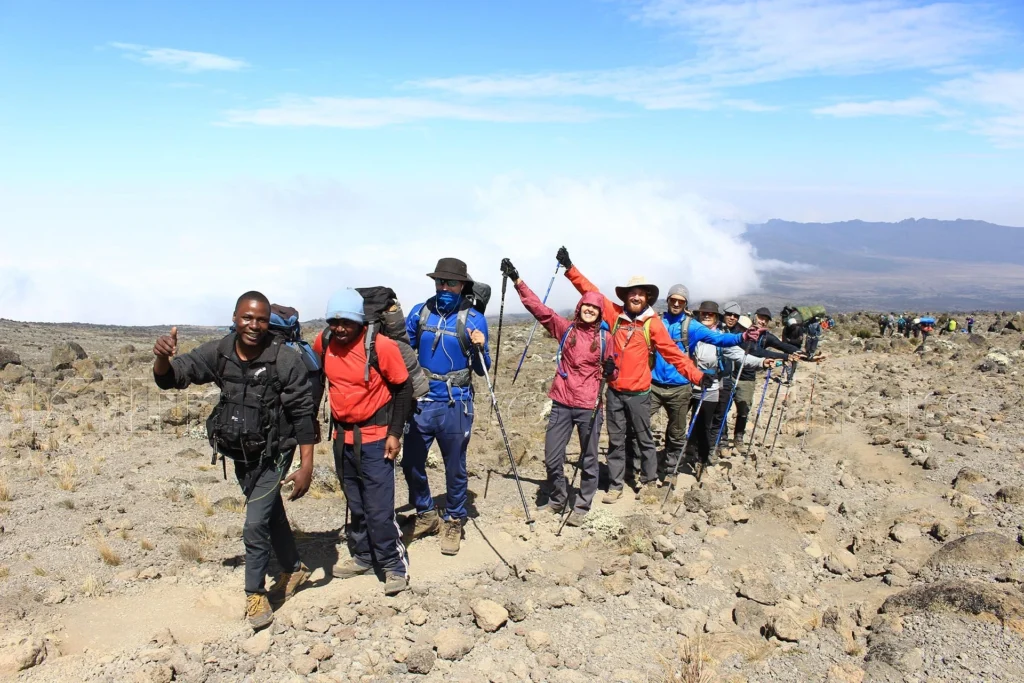
November to December – Short Rainy Season
Rainfall returns during this period, although it is usually lighter than the long rainy season.
Conditions
- Intermittent rain
- Fewer climbers
- Changing weather patterns
Am besten für
- Trekkers seeking quieter routes
- Climbers comfortable with occasional rain
Kilimanjaro Temperature by Altitude
Temperatures vary dramatically depending on elevation.
| Zone | Temperature Range |
|---|---|
| Regenwald | 15°C–25°C |
| Moorland | 5°C–15°C |
| Alpine Desert | -5°C–10°C |
| Summit Zone | -20°C to -5°C |
Summit night is typically the coldest part of the trek.
Why Weather Matters on Kilimanjaro
Weather affects:
- Trail safety
- Visibility
- Energy levels
- Akklimatisierung
- Erfolgsquoten des Gipfeltreffens
Poor weather can make climbing significantly harder.
Which Kilimanjaro Route Is Best During Rainy Season?
Rongai-Route
The Rongai Route is often considered the best rainy-season route because it approaches Kilimanjaro from the drier northern side near Kenya.
Advantages
- Less rainfall
- Bessere Trail-Bedingungen
- Lower mud exposure
How Weather Affects Altitude Sickness
Cold weather, dehydration, and exhaustion can worsen altitude symptoms.
Dry seasons often improve:
- Recovery
- Hydration management
- Overall trekking comfort
Is Kilimanjaro Cold?
Yes — especially near the summit.
Although Tanzania is near the equator, Kilimanjaro’s high altitude creates extreme cold conditions.
On summit night, temperatures can drop below:
-15°C (5°F)
Proper layering is essential.
Abschließende Gedanken
The best time to climb Kilimanjaro depends on your goals, comfort level, and trekking style.
For most climbers, the dry seasons provide the safest and most enjoyable conditions.
With proper planning, route selection, and preparation, Kilimanjaro can be climbed successfully year-round — but understanding the mountain’s weather is essential for a safe and rewarding experience.
 English
  Dutch
Dutch  French
  Czech
Czech  Spanish
  German
  Polish
  Italian
  Chinese
  Russian